• Home
  • Join the Fun
    • Locate Us>
      • Map
    • Zoo Hours
    • Fees
    • Programs
    • Membership
    • Cafés
    • Store
    • Games
  • Events
    • Movies
    • Birthdays>
      • Birthday Parties >
        • Cake
        • Icing
    • Memorial Day
    • Fantastic Father's Day
    • 4th Of July
    • Find the Cure
    • Mother's Day Brunch
    • Midnight Stroll
    • Weddings>
      • Receptions
      • Venues
      • Packages
      • Menus
    • Dinner Auction
  • About Us
    • Our Mission
    • Enrichment
  • Animals
    • A-M>
      • Australian Fur Seal
      • Australian Owlet
      • Bilby
      • Black Swan
      • Bottlenose Dolphin
      • Bridles Nailtail Wallaby
      • Cane Toad
      • Cassowarry
      • Corroborre Toadlet
      • Crimson Roscea
      • Dibbler
      • Dingo
      • Dugong
      • Eastern Snake Necked Turtle
      • Echidna
      • Emu
      • Fairy Penguin
      • Flying Fox
      • Frilled Lizard
      • Giant Cuttlefish
      • Goanna
      • Great White Shark
      • Koala
      • Kookaburra
      • Kowari
      • Leadbeater's Possum
      • Lumholtz Tree Kangaroo
      • Magpie
    • N-Z>
      • Northern Death Adder
      • Numbat
      • Phascogale
      • Platypus
      • Pygmy Possum
      • Quokka
      • Quoll
      • Rainbow Lorikeet
      • Red Kangaroo
      • Saltwater Crocodile
      • Sawfish
      • Spotted Cuscus
      • Sulfur Crested Cockatoo
      • Sugar Glider
      • Tasmanian Devil
      • Tawny Frogmouth
      • Thorny Devil
      • Walleroo
      • Wedge Tailed Eagle
      • Weedy Seadragon
      • Western Swamp Turtle
      • Wombat
  • Contact Us

Wallaroo
Macropus robustus
Francesca Pacchiana

ID#12
Picture
Classification: Mammal
Endangered Status: Lower
risk
Habitat: rocky outcrops, places with stony
ground

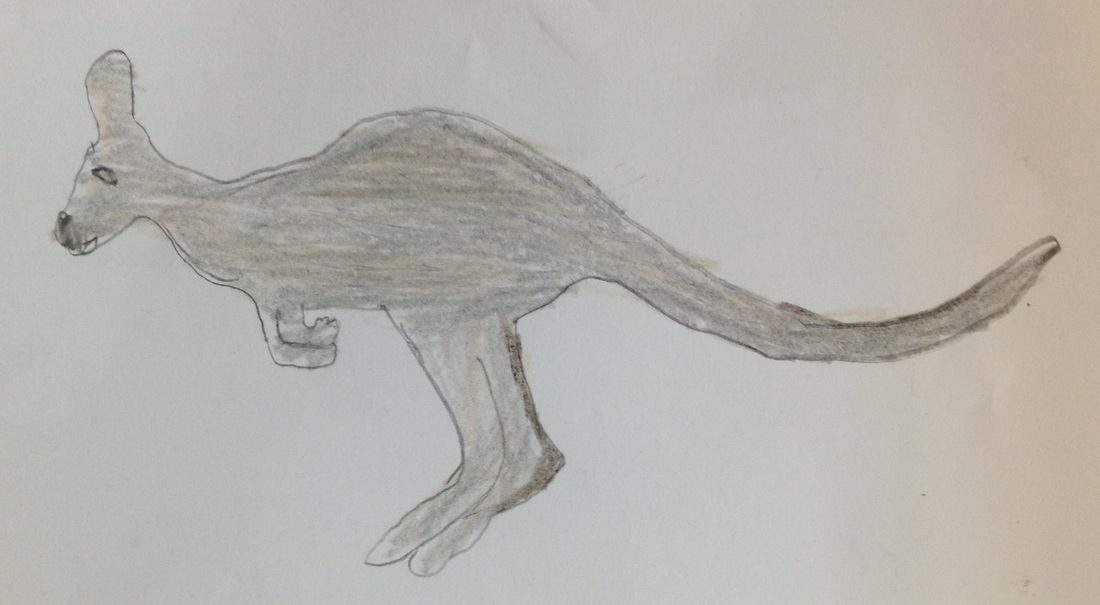
The Wallaroo is a 39-55 inch marsupial. It is a big animal, males
weighing 50-100 pounds and females 40-50. They have large, strong legs that allow them to leap long distances. The Wallaroo is usually brown, tan, black or grey. They have bare black noses and large ears. It has smaller limbs than other kangaroo species, which is thought to be an adaption for jumping on rocks. They have shaggy fur and thick, short tails.
          
Wallaroos live in rocky outcrops, or places with stony ground. The
Wallaroo lives by itself and is an herbivore. They graze on grass, plants,
etc. They are also diurnal, awake during the day and asleep at
night.
          
Wallaroos, like humans, can breed throughout the year. The gestation
period for the Wallaroo is 32 days. A baby Wallaroo is called a joey. There is only one joey born, and even though it is blind at first, it finds a way into
the pouch and will stay there until 6 months of age. It still returns there
until sometime between nine months and one year. A female Wallaroo can be pregnant and have a joey in its pouch at the same time.

There are many interesting facts about Wallaroos. For example, to survive when there is a drought, the Wallaroo can dig up to 3 feet
(one meter) deep to find water. When a joey is born, it is no bigger that the size of a peanut. Out of all kangaroo species, Wallaroos have best adapted to their hot dry habitat. Also, Wallaroos have a tapered tail, which they use as a third leg while setting and as a rudder while jumping. 


Picture
©2013 Zoostralia