
Spotted Cuscus
|
ID#28
|
|
Classification: Mammal
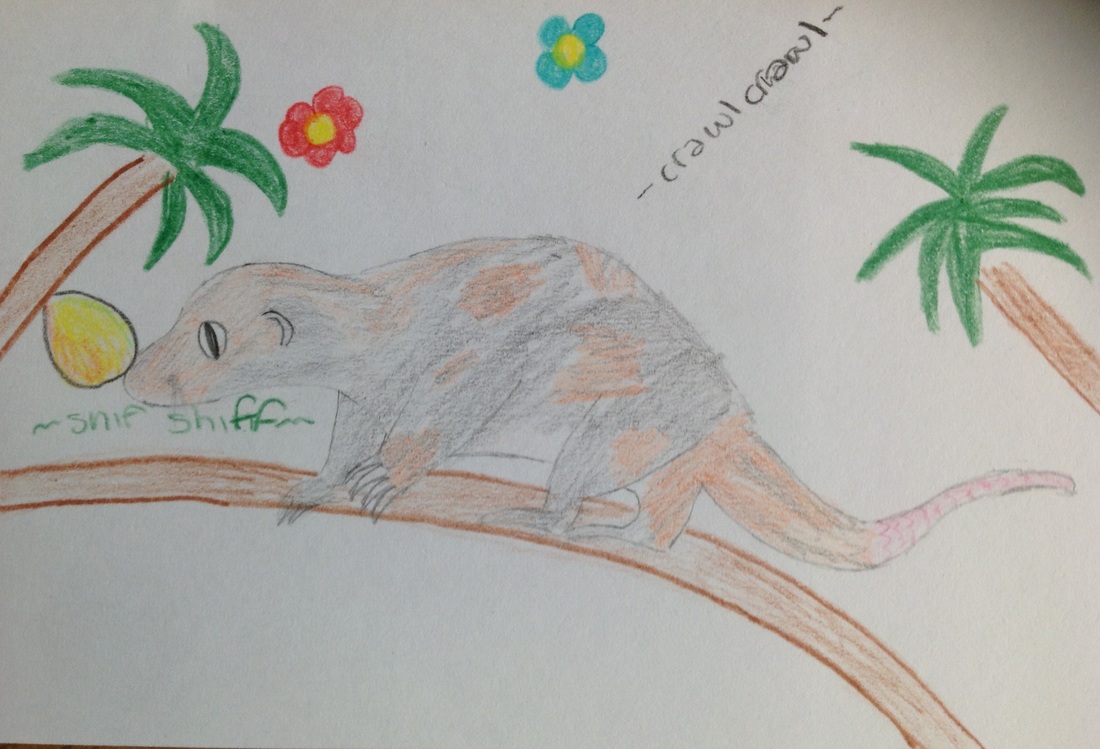
Endangered Status: Least concern Habitat: Rainforests in New Guinea and in certain parts of Australia The common spotted cuscus is about the size of a large house cat, weighing between 1.5 to 6 kilograms. The body size is about 35 to 65 centimeters (14 to 26 in) long, and a tail 32 to 60 centimeters (13 to 24 in) long. It has a round head, small hidden ears, thick fur and a long tail that helps them climb up trees to hunt and grab fruits out of trees. Its eyes can be a color from yellows and oranges to reds. Spotted Cuscuses also have strong curved claws to sink into a tree while climbing. The normal spotted Cuscus has thick, wool like fur of many different colors depending on age, gender and location. Males are usually grey/white or brown/white with splotchy patterns on their back and a white underbelly. Only males have spots on them. Females are usually white or grey and have no spots. The spotted cuscus has a curled tail. The upper part of the tail closest to the body is covered in fur, while the lower half is covered in rough scales on the inside surface to grip branches. The common spotted cuscus is usually shy, so it is almost never seen during the day, especially in northern Australia. It is nocturnal, hunting and feeding at night and sleeping during the day on self-made platforms in tree branches. It also has been found resting in tree hollows or under tree roots. It is slow moving and somewhat sluggish, sometimes mistaken for sloths other possums, or even monkeys. The common spotted cuscus is typically a solitary animal, feeding and nesting alone. Interactions with others, especially between competing males, can be aggressive. The cuscuses put saliva on branches and twigs of trees to inform others of their territory. If they encounter another male in their area, they make barking, snarling and hissing noises, and stand upright to defend their territory. They are aggressive, and can scratch, bite and kick predators. Cuscuses mate year-round and with multiple partners. The gestation period for a pregnant female is around 13 days, with a pouch period of 6–7 months. Female cuscuses can have up to 3 babies per birth. Each young weighs no more than 1 gram at birth, and is held in the moms pouch. Cuscuses can live to be 11 years old, and can start having babies at around one year old. The common spotted cuscus is hunted for its meat and fur in New Guinea. Despite hunting, it is still common in New Guinea and most islands; however it is rarely seen in Australia, mostly because it is a very shy creature. The conservation status of the common spotted cuscus status is least concern because of its wide population distribution, ability to survive in a variety of environments, and lack of dominating predators. However continued human expansion, an increase in demand for cuscus meat and pelts, and destruction of its natural habitat could lead to the species become endangered, which has already happened to the sister of the spotted cuscus, the black cuscus which is becoming endangered because of poachers and slash and burn farmers. |